Why we started this
Most "save money" sites on the internet are coupon aggregators wearing editorial costumes. Endless lists of "10 weird tricks," AI-generated round-ups of cashback apps, and clickbait that promises hundreds in savings and delivers a $3 promo code. We got tired of it. So in early 2026 we started Savings Radar: a small, independent blog about the actual moves that lower the bills we actually pay.
The format is simple. We take a category we spend money on — car insurance, streaming, internet, groceries, refurbished electronics — and we run an experiment with our own money and our own time. Then we write up what worked, what flopped, and the dollar amount each tactic moved.
The Savings Radar team
We're a team of three based in New York. None of us are financial advisors. We're regular consumers who pay regular bills, and we got obsessive about treating those bills like a problem with a solution.
- Editorial & testing — running the experiments, taking the calls, writing the long-form pieces.
- Spreadsheets & receipts — every dollar number you read on this site is reconciled against a real statement, screenshot, or receipt.
- Fact-checking & copy editing — every published piece gets read by at least one person who didn't write it.
We don't list our individual names on every byline because the work is collaborative. When one of us shops a new insurance quote, the others ask the obvious questions: What deductible? What coverage? What did the agent push? Would you actually switch? Those answers are the article.
What we cover
Our beat is intentionally narrow. We write about:
- Recurring bills — internet, mobile, home alarm, streaming, electricity supply choice, gym memberships.
- Insurance shopping — auto and home/renters, comparison playbooks, what to ignore in the quote.
- Subscriptions & software — annual vs monthly math, cancel-then-resub windows, family-plan stacking.
- Groceries & household basics — warehouse club math, store-brand audits, the per-unit reality check.
- Refurbished & open-box electronics — when the "deal" is real, and the categories where it isn't.
- Bill negotiation — exact phone scripts, with the awkward pauses left in.
We don't cover investing, crypto, or anything that depends on guessing what a market will do. There are smarter people writing about that.
Editorial independence
Plain honesty, because it matters:
- We have never published a sponsored post and we don't plan to.
- No company, carrier, or merchant has approval rights over our copy. We don't send drafts.
- We sometimes earn a commission when a reader clicks a link in our articles and signs up or buys something. That commission does not change the price you pay, and it does not change which option we recommend. We've recommended providers that pay us nothing, and we've panned services that pay generously.
For the full picture, see our affiliate disclosure and editorial standards. They are the two most-read pages on this site, and that's by design.
How we test
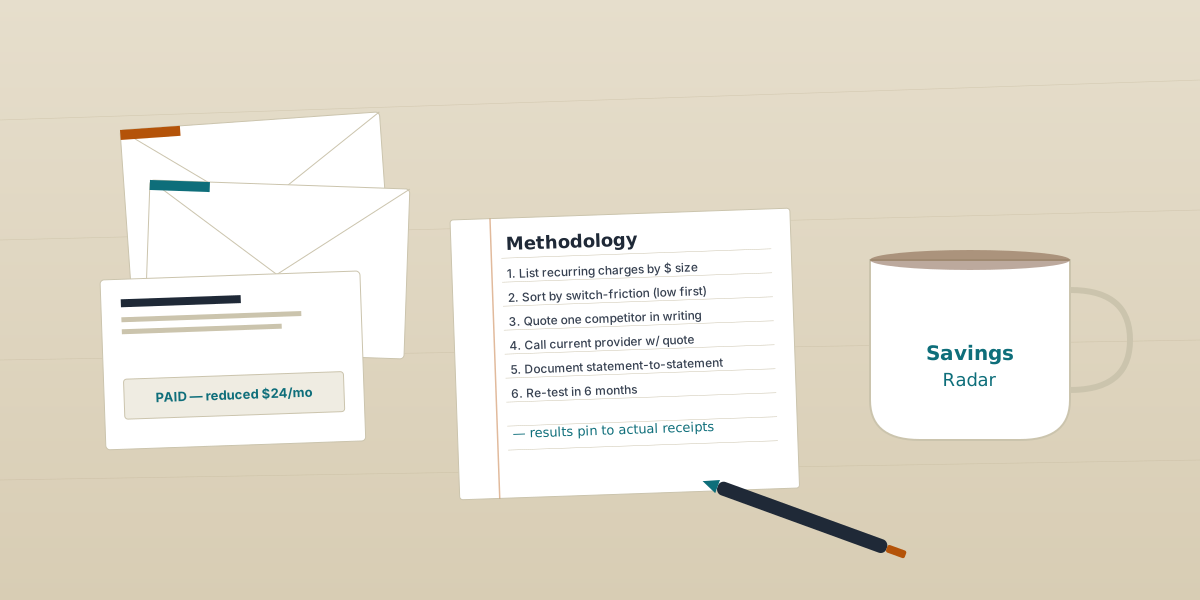
Every tactic gets at least one of: a single-session experiment with timed results (e.g., "shop six insurance carriers in two hours"), a multi-month real-world stretch where we live with a change and see if it sticks, or both. Numbers we cite are reconciled against actual statements — we don't publish round-figure estimates dressed up as data.
How to reach us
If you have a tactic that's worked for you, a correction, or a category you'd like us to look at, the best way is the contact form or just an email to hello@savingsradar.org. We read everything, even if we can't always reply quickly.
Thanks for being here.
— The Savings Radar team